 FINDING DIRECTION
A black box accepts an input and produces an output while hiding the mechanism inside.
You describe what you want the application to do, and the agent writes all the code. You are coding yourself into a black box.
In 1952, the de Havilland Comet entered passenger service as the first pressurized civilian jet transport. It carried people higher and faster than the propeller-driven airliners it was replacing.
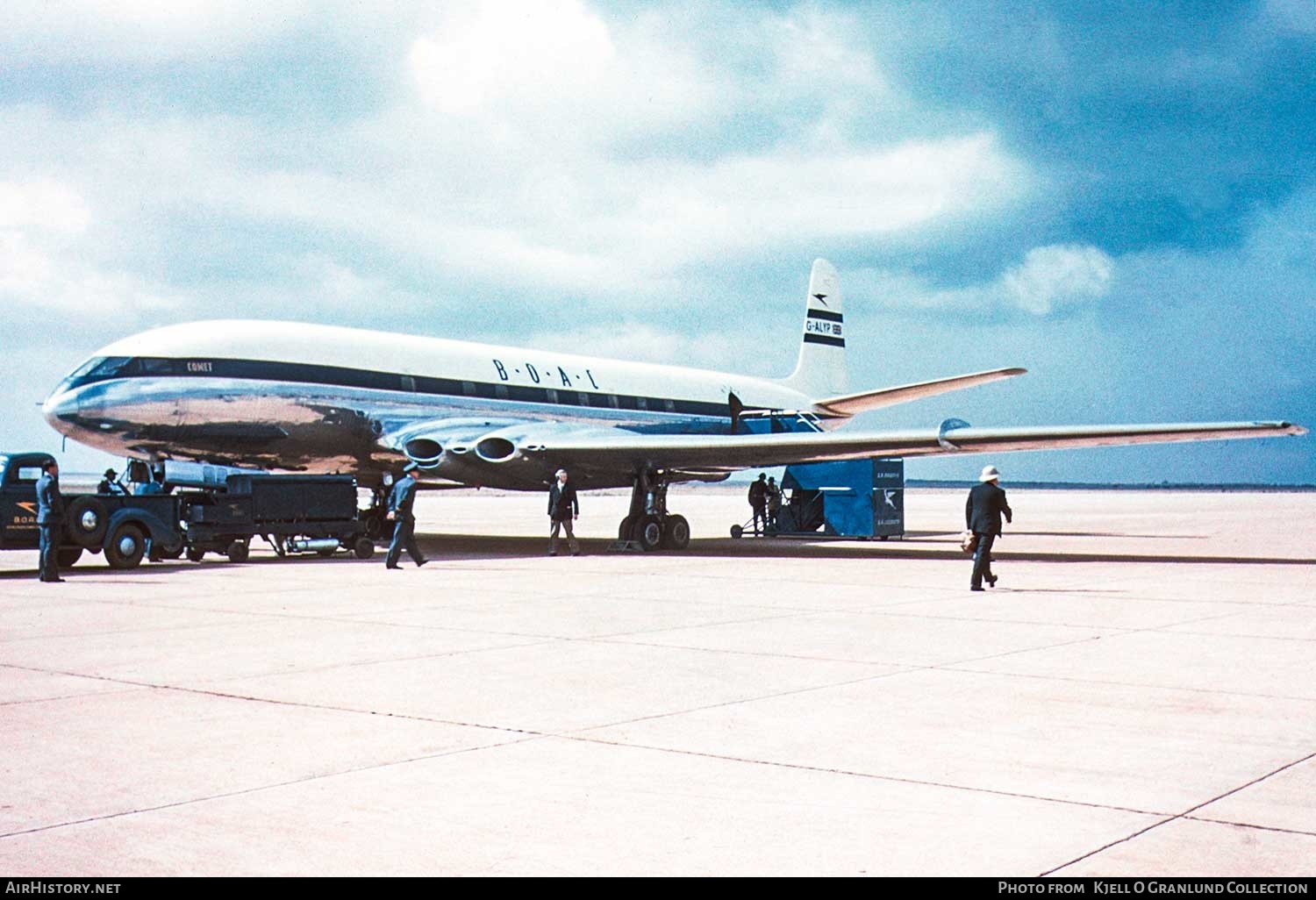
On January 10, 1954, BOAC Flight 781 left Rome for London. About twenty minutes later, as the Comet approached 27,000 feet, its radio transmission stopped in the middle of a sentence. The aircraft broke apart over the Mediterranean near the island of Elba. All 35 passengers and crew were killed. The cause remained unknown. The Comet fleet was grounded while de Havilland made modifications covering a wide range of possible causes, then returned to service in March with the crash still unresolved.
Nearly three months later, another Comet left Rome for Cairo. South African Airways Flight 201 broke apart while climbing over the Mediterranean near Naples. All 21 passengers and crew were killed. The Comet lost its certificate of airworthiness and the fleet was grounded indefinitely. The Federal Aviation Administration's history of the investigation describes the two accidents and the work that followed.
Investigators recovered about 70% of the aircraft and reconstructed its fuselage. They placed another Comet fuselage inside a water tank and repeatedly pressurized it until the cabin failed. The test and recovered wreckage showed that repeated pressurization had caused metal fatigue in the fuselage.
David Warren was an Australian scientist on the panel investigating the Comet disasters. He had recently seen a miniature wire recorder and proposed placing one inside an aircraft to preserve cockpit conversation and instrument readings from its final minutes. His working prototype was completed in 1958.
It was during World War II that Royal Air Force crews began using the name black box for radar, bombing, and navigation equipment.
Warren brought his recorder to Britain, where it was demonstrated to aviation officials and appeared on BBC television and radio. The press adopted the term black box for flight recorders, and the name stuck.
After the Comet investigations, new requirements called for testing complete pressure cabins. The United Kingdom later mandated flight data recorders in 1965.
Investigators use data from the flight recorders along with physical evidence from the crash to recreate the aircraft's final moments.
From that reconstruction, they determine probable causes and recommend changes to aircraft, training, maintenance, and regulations. Airlines also review flight data during ordinary operations to find deviations before they contribute to an accident. Modern recorders are installed in the most crash-survivable part of an aircraft and built to withstand severe impact, fire, and deep water. The National Transportation Safety Board describes them as evidence that can be difficult or impossible to obtain by other means.
The original boxes were sealed around classified controls. Flight recorders were sealed so their evidence could survive impact, fire, pressure, and water. Now the box is software, and its contents are inaccessible to most people.
Today, code becomes a black box in several ways. Proprietary services and AI models expose only their interfaces. Libraries and frameworks hide complexity behind APIs. Code generators and low-code tools produce implementations their users never read. Legacy code outlives the people who understood it. Distributed applications spread one action across services, queues, data stores, and vendors. AI agents now write entire applications from a description.
When something fails, you have to search across code, services, logs, generated files, and vendor dashboards to find where the behavior began. A change in one place can alter behavior elsewhere. Security, data handling, and failure recovery become harder to verify. If the agent also explains the code, your understanding depends on the same tool that wrote it.
It’s totally possible that in the near future, all code is a black box. Imagine everyone having to use AI to write machine code because it is more efficient, then depending on the same AI to read, change, and explain what it wrote. We would see what goes in and what comes out. AI would control our only view of everything in between.
Tools for Understanding explores that future and the tools we can build to preserve access. We already know several places to start.
Input and output tests. Give the application a known condition, observe its response, then change the condition and compare the result. Each result adds evidence about the behavior inside.
Trace mapping. A map shows how the interface, code, data, and services connect. A runtime trace follows one action through that map and records the values before and after each step.
Contextual explanations. Select a request, stored value, error, or execution step and ask what happened there. The question carries the relevant code, state, and event, and the answer points back to runtime evidence, tests, compiler output, documentation, or source code.
Simulations. Replay the trace with a timed-out service, different stored data, or a new event order. Each variation tests the explanation and reveals how the path changes.
Shared records. Save traces, scenarios, and questions as artifacts the team can inspect and revise together. Everyone can work from the same observed behavior.
These tools give us a glimpse of what happens inside.