 FINDING DIRECTION
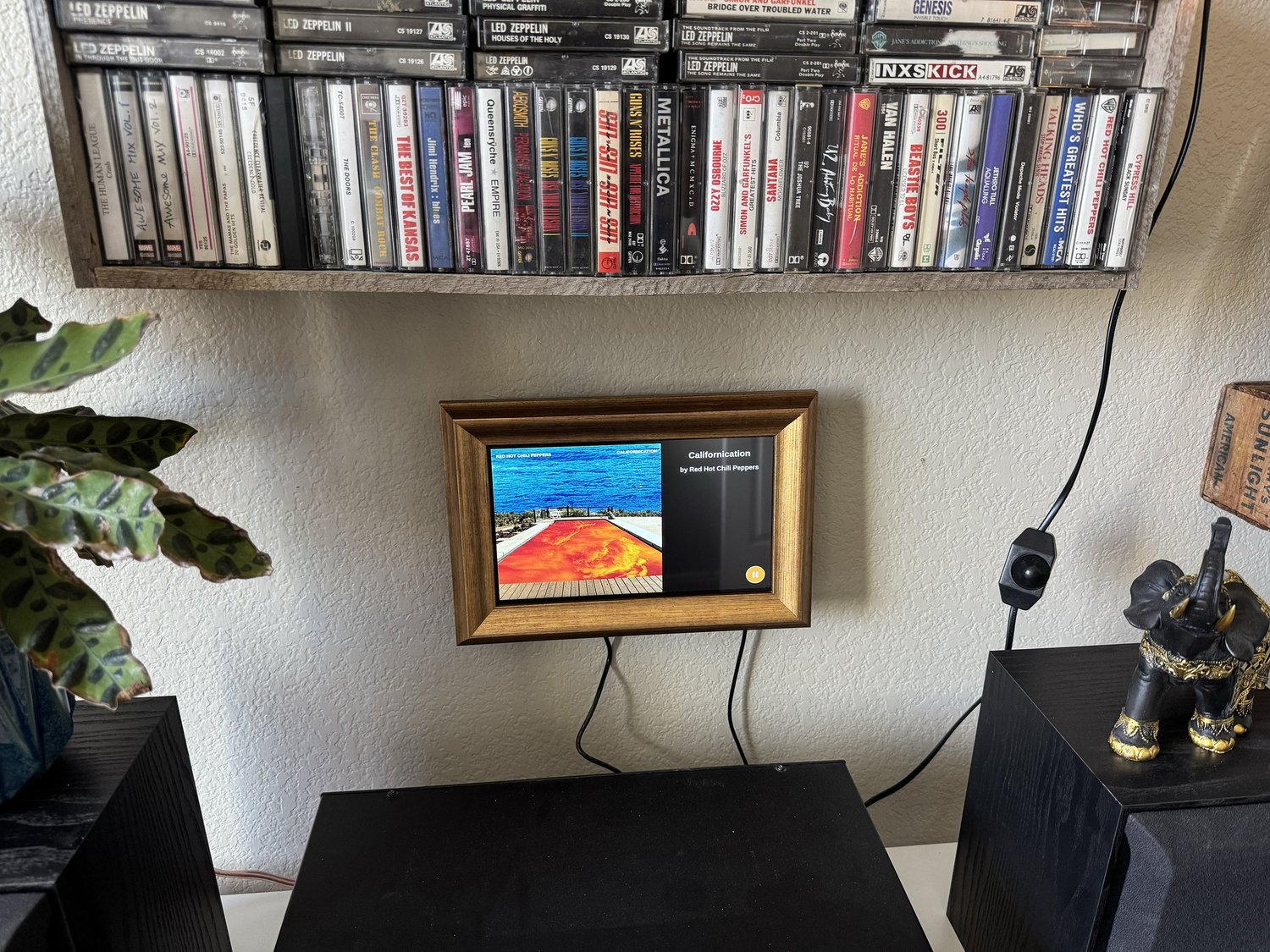
Cassette listening keeps the sound of a physical album and loses most of its visual presence. I built a display that listens with you and restores the cover art.
[ 01 / THE PROBLEM ]
The missing cover.
Streaming interfaces keep the album cover, artist, title, and track visible while the music plays. A record sleeve can sit beside the turntable. A cassette disappears into the deck.
The artwork is part of how I remember an album. I wanted that visual layer in the room without changing the ritual of choosing a tape and pressing play.
Artwork and metadata remain on screen.
The sleeve stays visible beside the player.
The physical object disappears inside the deck.
[ 02 / THE RESPONSE ]
Listen. Identify. Display.
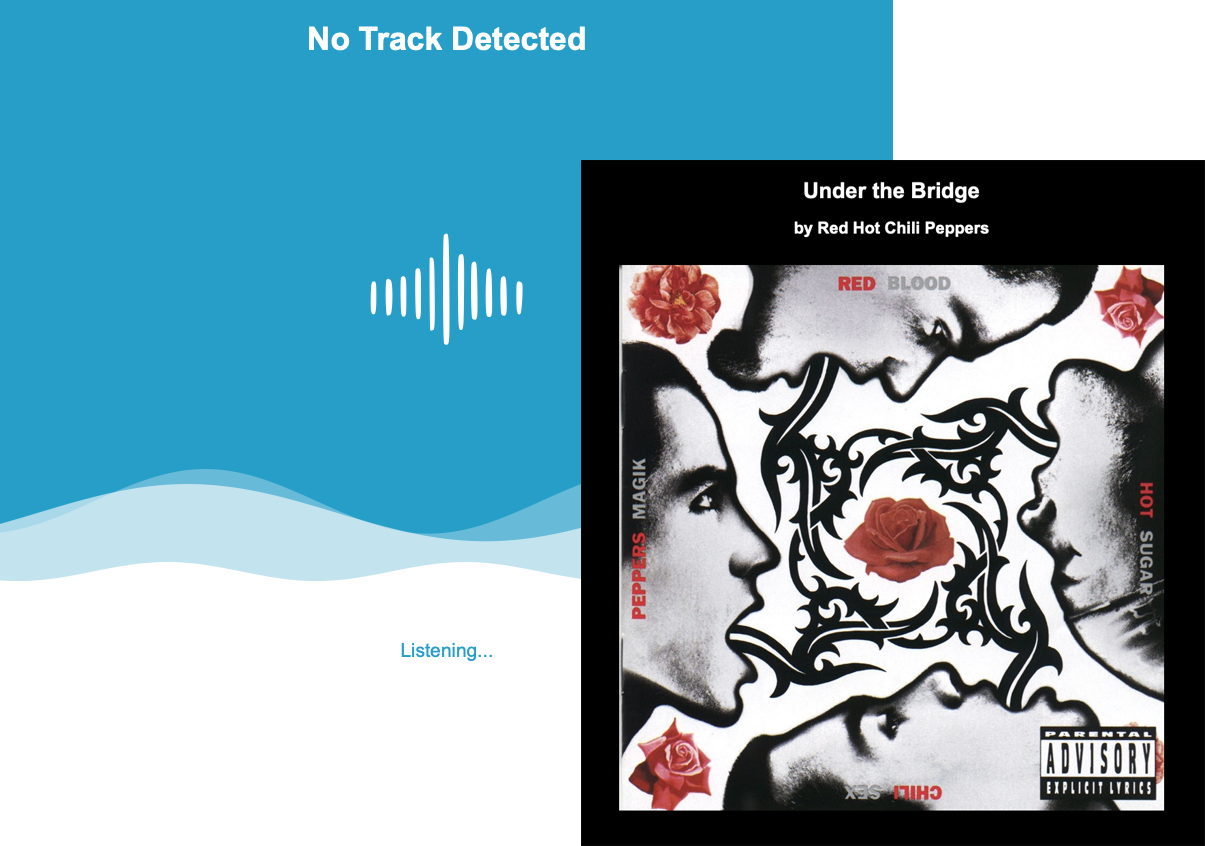
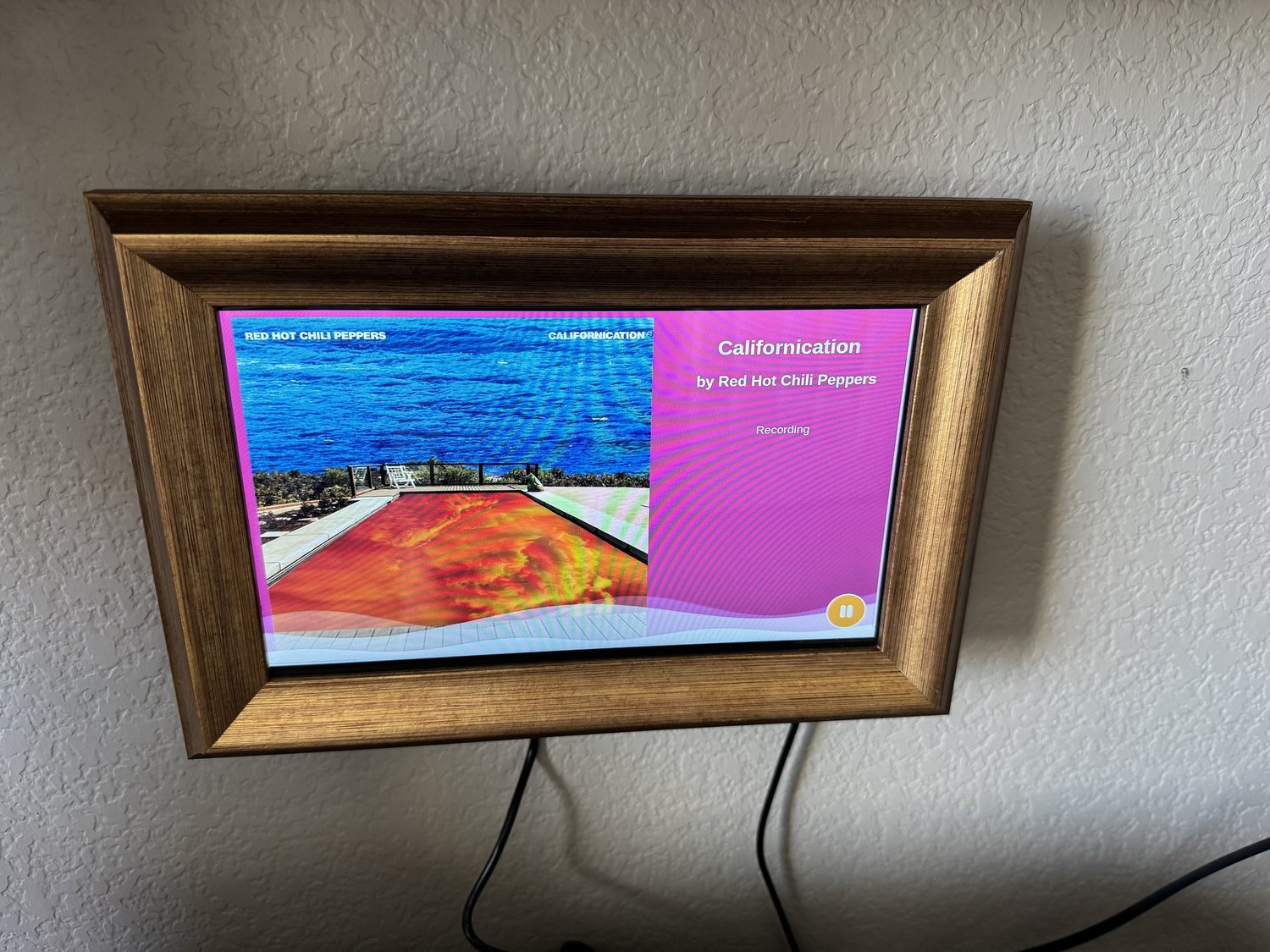
A Raspberry Pi captures a short audio sample from the room. A Python service identifies the recording and returns the album metadata. A small web application presents the cover, artist, album, and track on a dedicated screen.
The state machine keeps the current cover visible, retries an uncertain match, listens for the next track, and returns to a neutral state after a longer gap.
[ 03 / THE OBJECT ]
Artwork across the room.
The screen sits inside a wooden frame so the finished prototype reads as a changing album cover rather than another computer. The interface uses large artwork, restrained metadata, and a clear listening state.
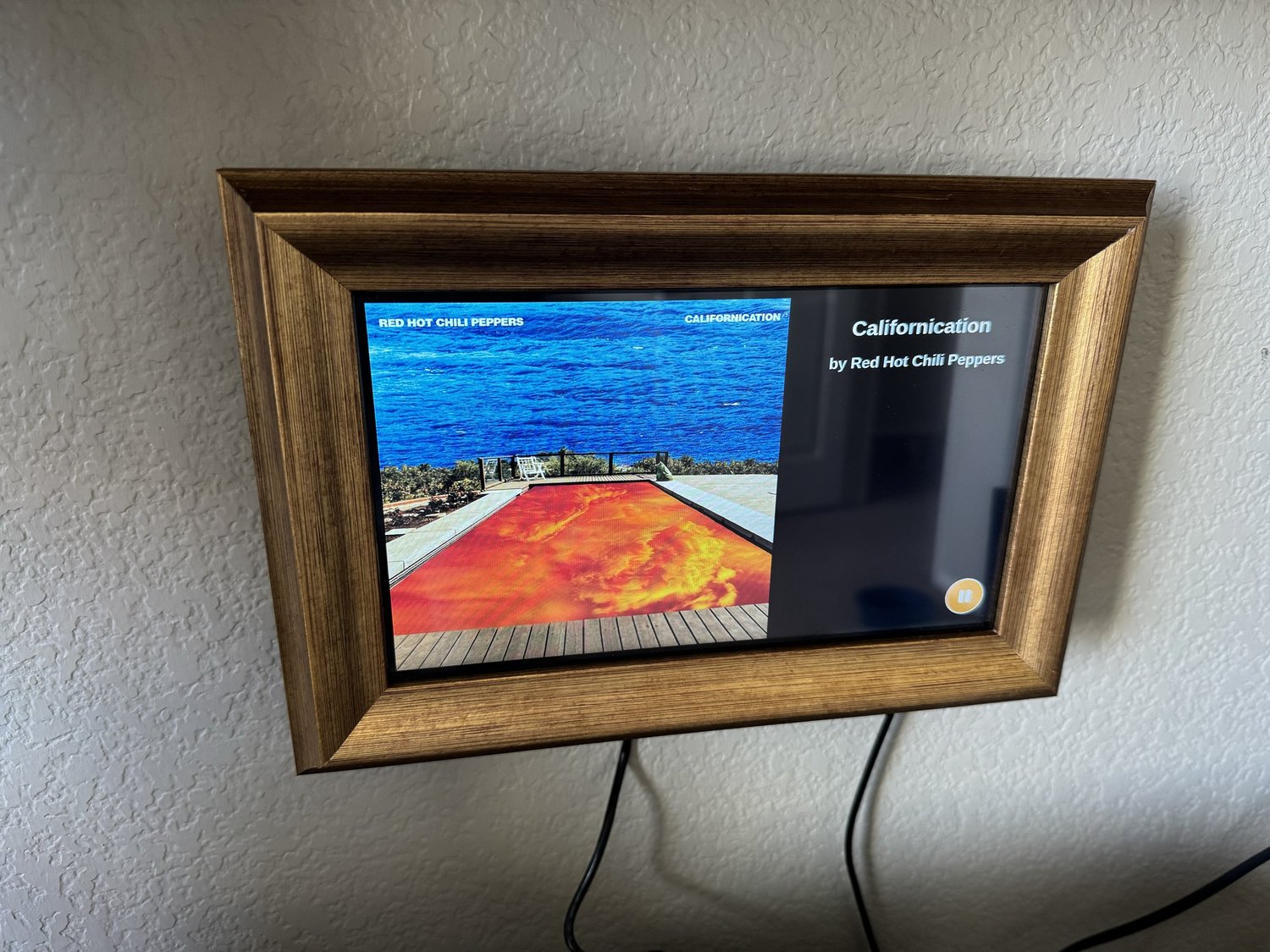
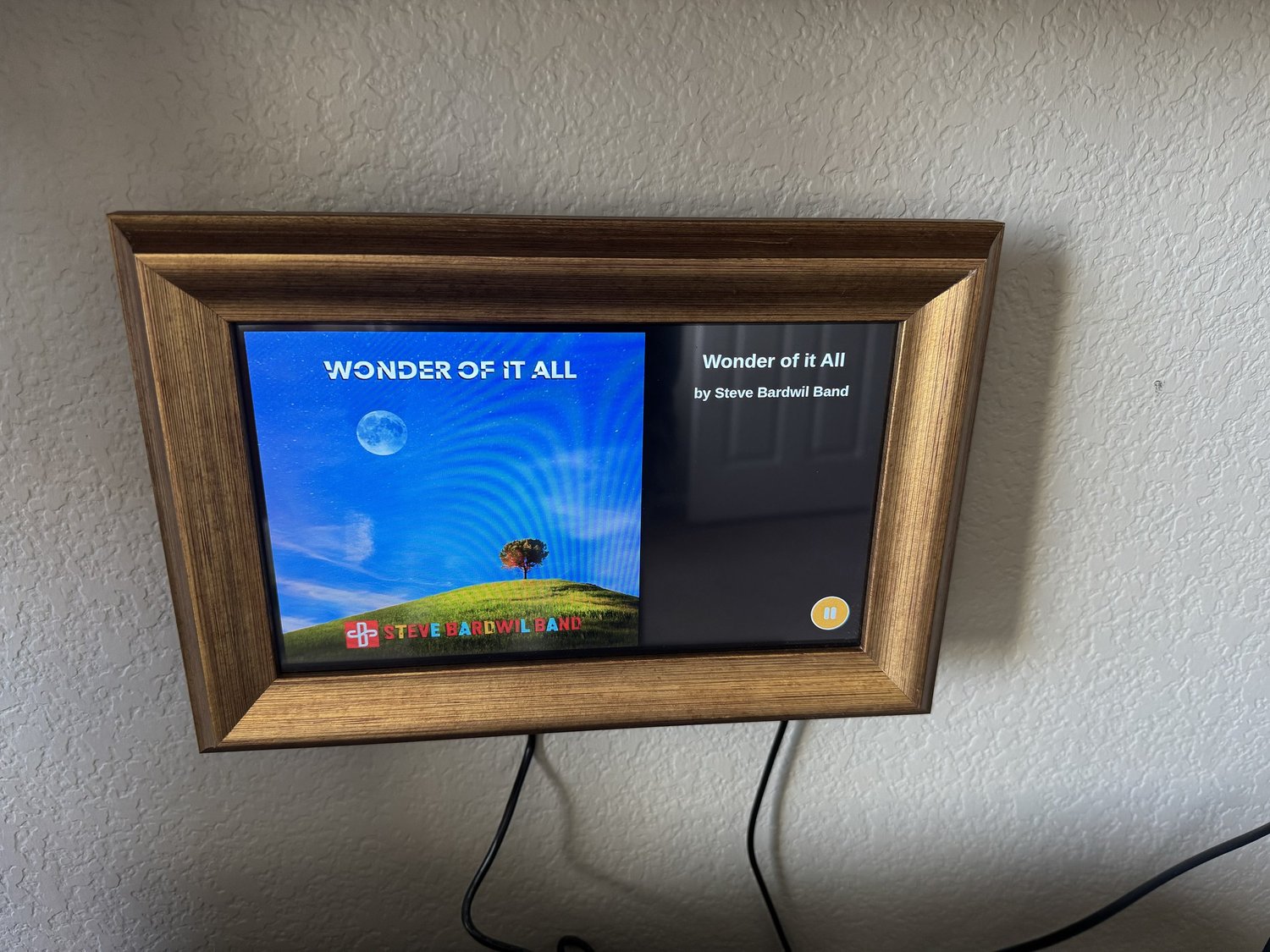
The prototype connects the tactile act of playing a cassette with the visual context listeners now expect. It adds information without asking for another interaction.