 FINDING DIRECTION
Most cassette storage hides the collection in drawers or packs tapes into slots with little room for your fingers. I designed the shelf around choosing a tape.
[ 01 / THE MARKET ]
Storage without access.
The common options solve capacity while making selection awkward. Drawers conceal the tapes at the back. Individual wall slots show the collection but leave little clearance for removing one.
Plastic drawers.
High capacity. Rear labels hidden. The drawer opens before the choice begins.
Individual slots.
Labels visible. Tight spacing. Each tape needs space for a hand to reach it.
Pull-out rows.
Every spine visible. The selected row comes forward and tilts into reach.
[ 02 / THE SOLUTION ]
See the row. Pull the shelf.
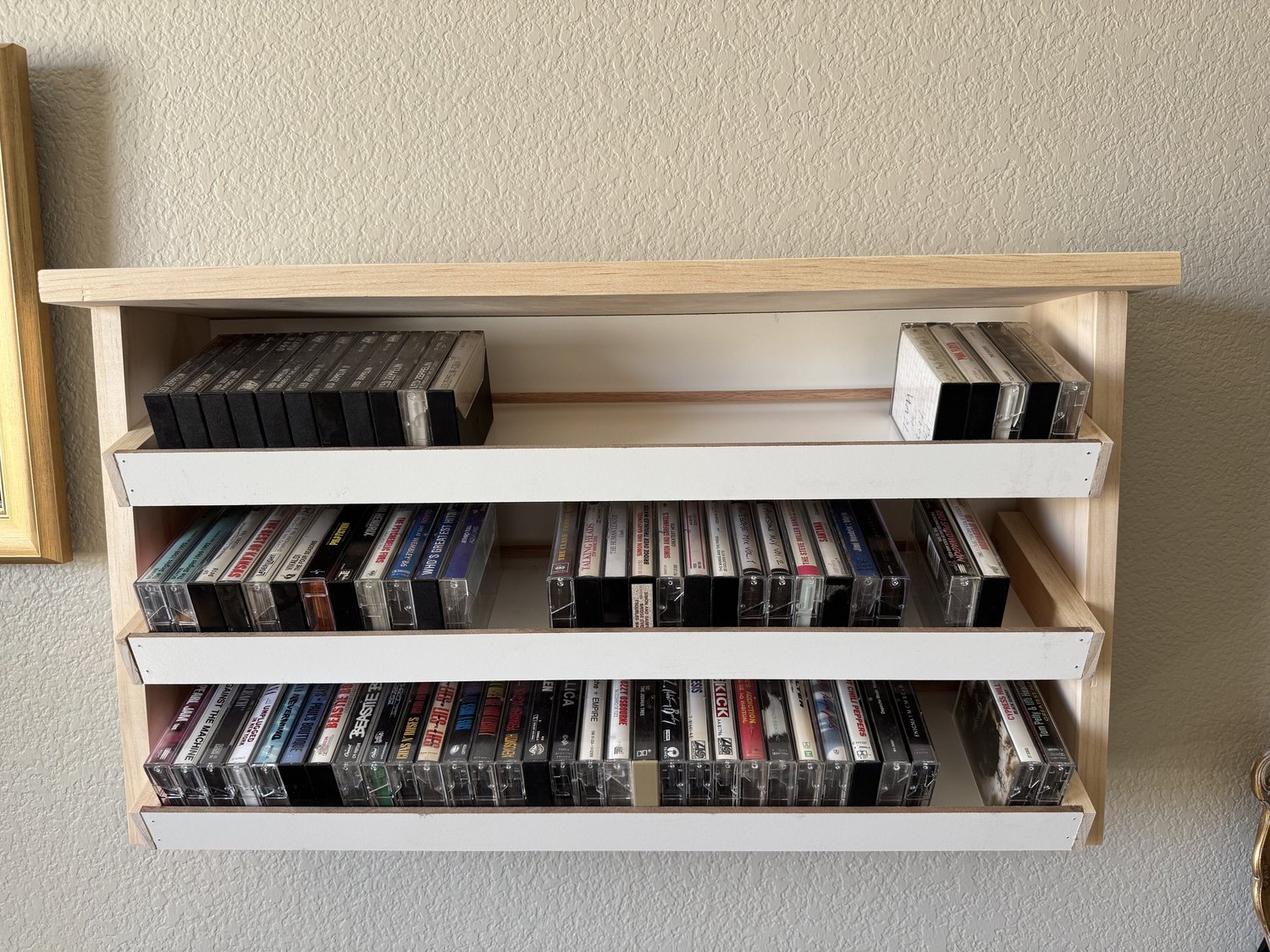
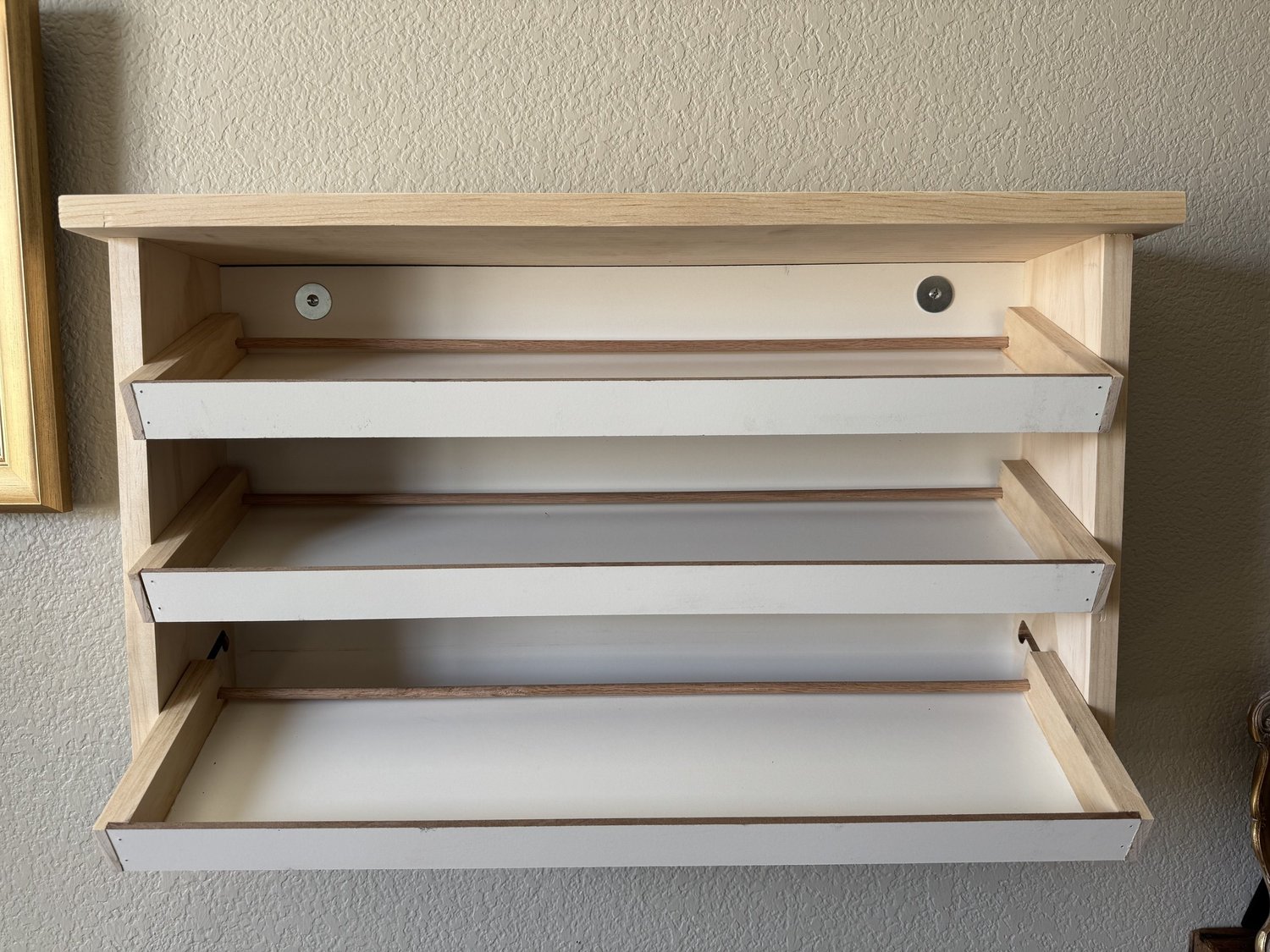
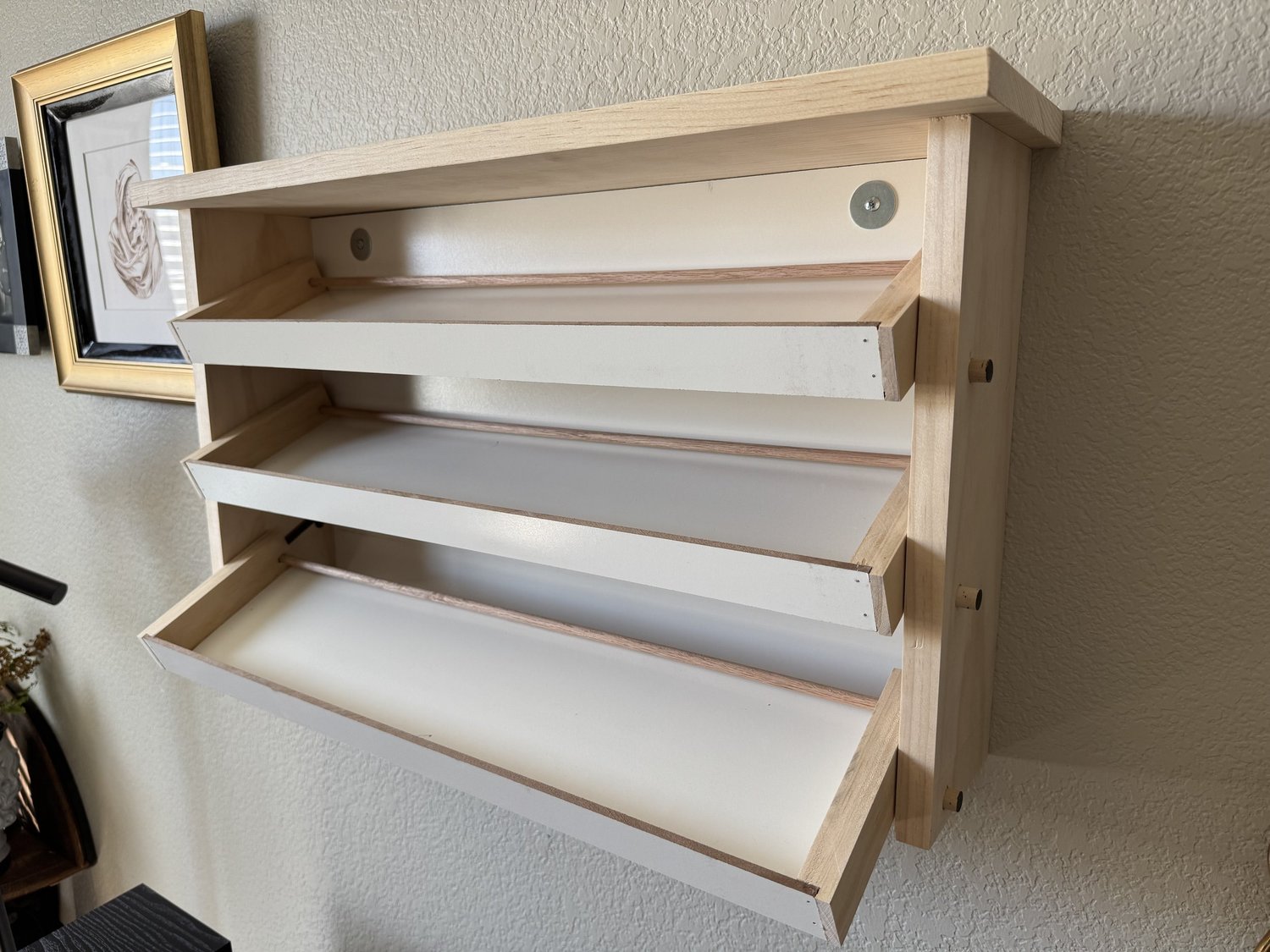
The cassettes sit sideways with their spine labels facing out, like books. Each of the three shelves holds 34 tapes and slides forward when a deeper view of the row is needed.
A single cassette comes out with a tilt and lift. The complete shelf can also move forward and down, opening the row without removing a drawer or disturbing the tapes around it.
[ 03 / THE MECHANISM ]
Gravity does the locking.
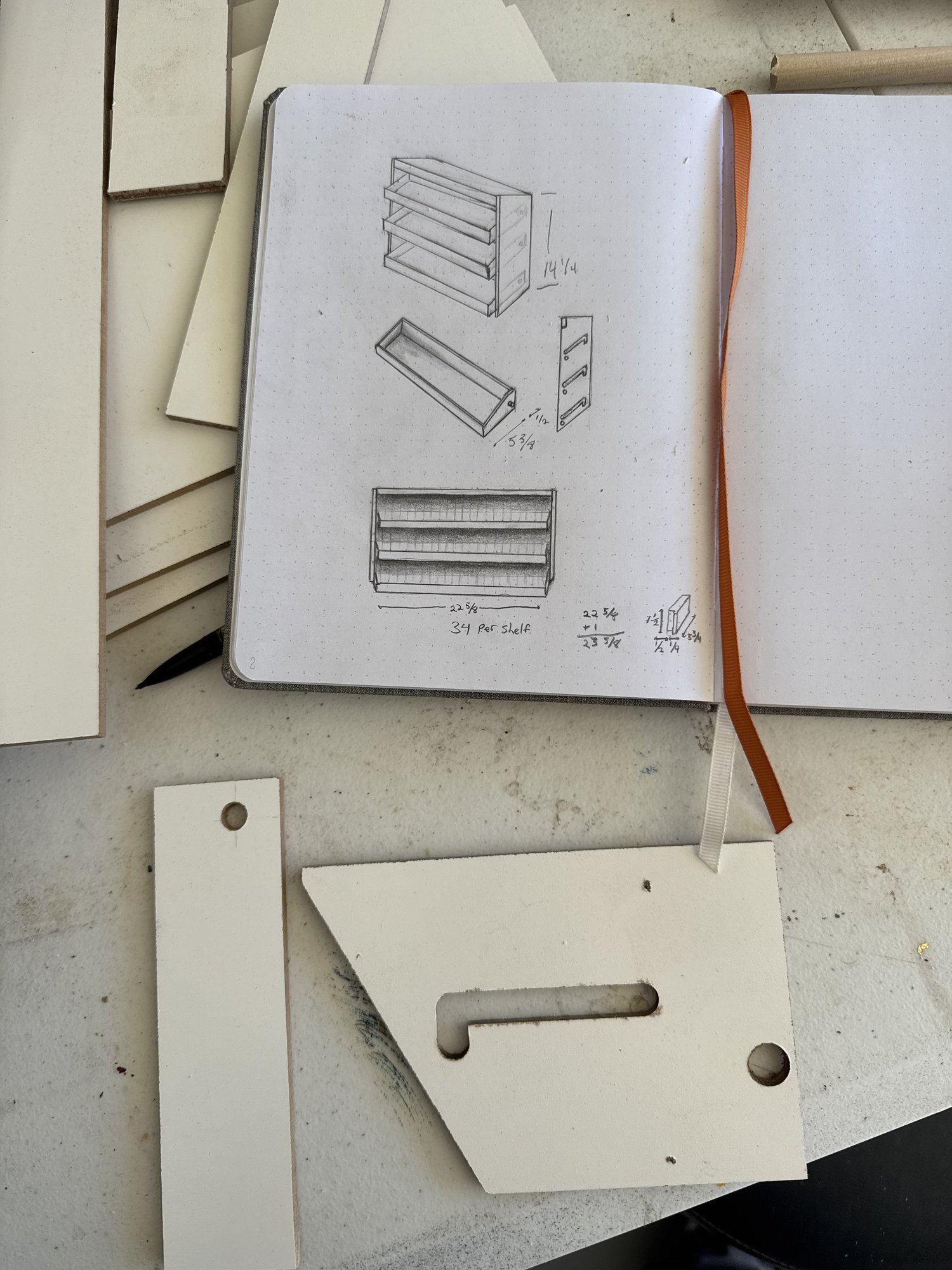
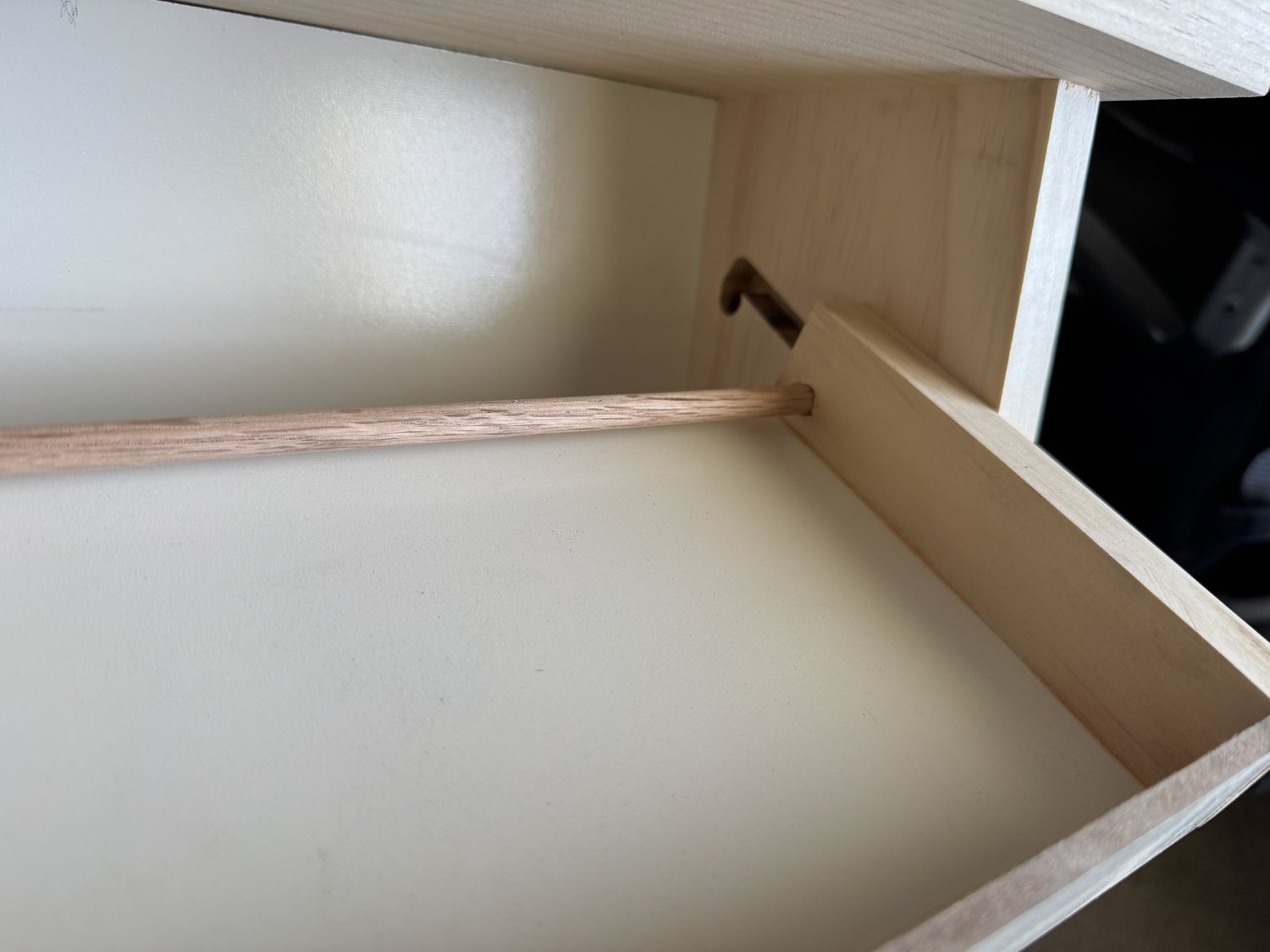
I made a router template for an L-shaped track in each side panel. The shelf slides along the long channel and drops into the short leg when closed. Gravity holds it in position.
Oak dowels guide the movement and remain visible from the side. The same parts provide structure, control the path, and add a tactile detail to the finished object.
[ 04 / THE RESULT ]
More than 100 tapes. One glance.
The wall-mounted piece holds the collection across three compact rows. Every label remains visible, and every tape is available without searching through a drawer.
The design started with a small interaction—choosing one tape—and let that interaction determine the orientation, movement, joinery, and final form.