 FINDING DIRECTION
Aegis runs agent work on a local machine with approvals, traces, artifacts, and deliberate connections to hosted models and external tools.
[ 01 / THE PROBLEM ]
Useful agents need an operating environment.
An agent needs project context, tools, state, permissions, and a record of what happened. Those parts matter most when the work involves private files, source code, research, or actions that should stop for review.
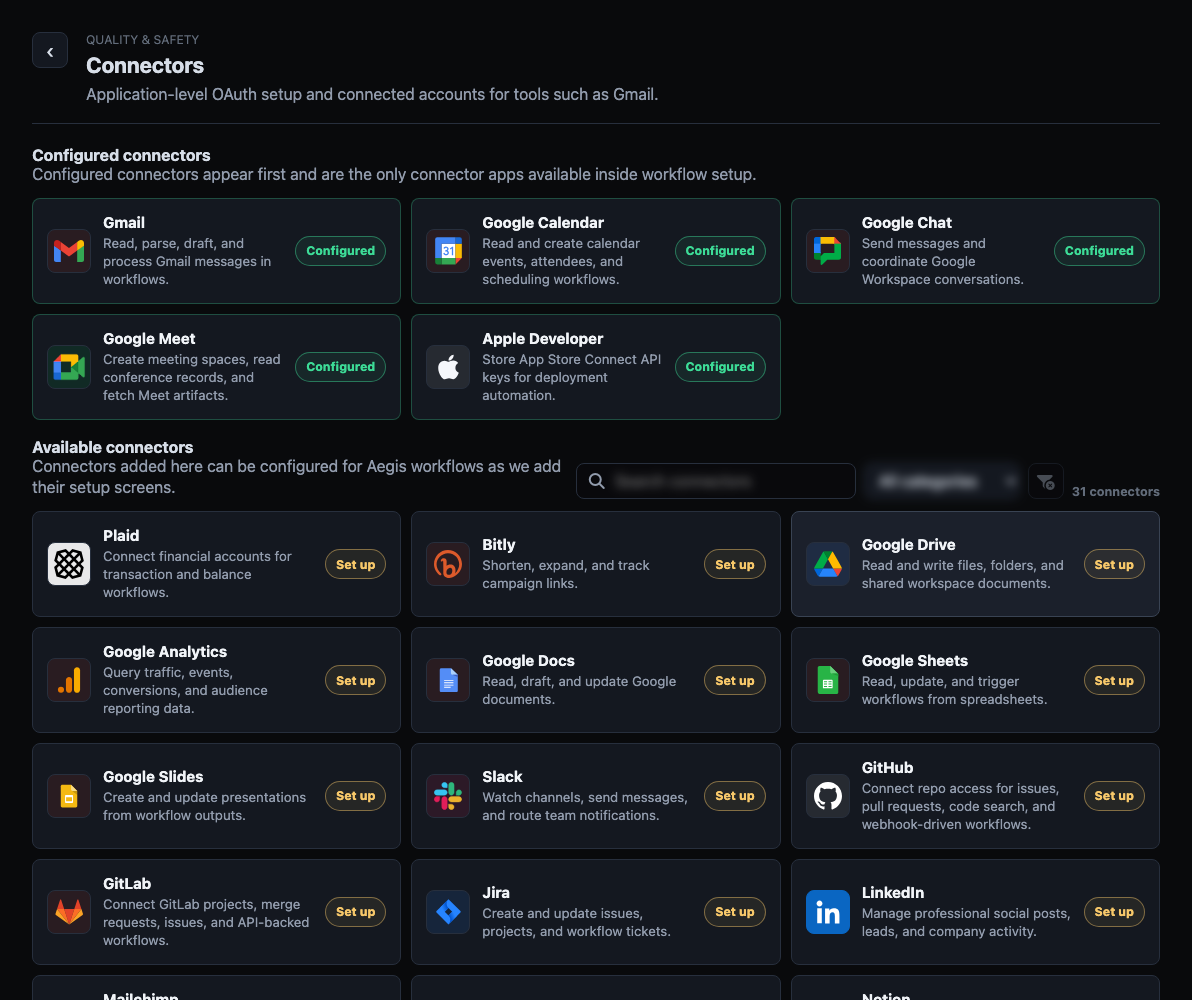
I built Aegis to keep that operating environment on the computer where the work already lives. Project files, run history, uploads, artifacts, and secrets stay local. A workflow can call a hosted model or external connector when the task requires it.
Project files, instructions, uploads, and durable memory.
Tool permissions, approvals, failures, and retry policy.
Traces, verifier output, artifacts, and the final result.
[ 02 / THE RUN ]
Supervision at every step.
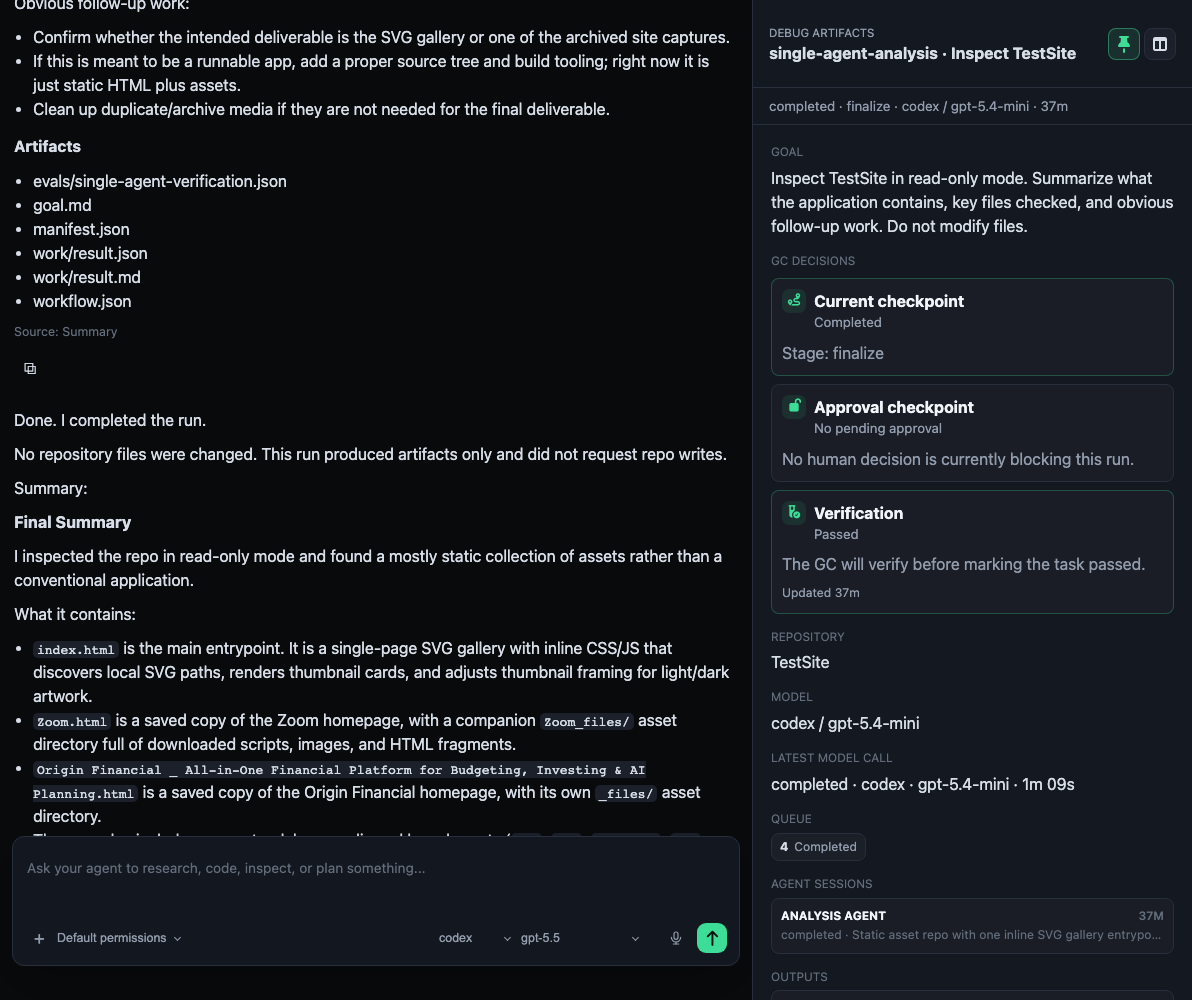
A run starts with an objective and a bounded workspace. The harness assembles context, routes the task to an agent, exposes the permitted tools, and pauses when an action needs approval. Verification and artifacts remain attached to the same run.
[ 03 / THE INTERFACE ]
An operator console.
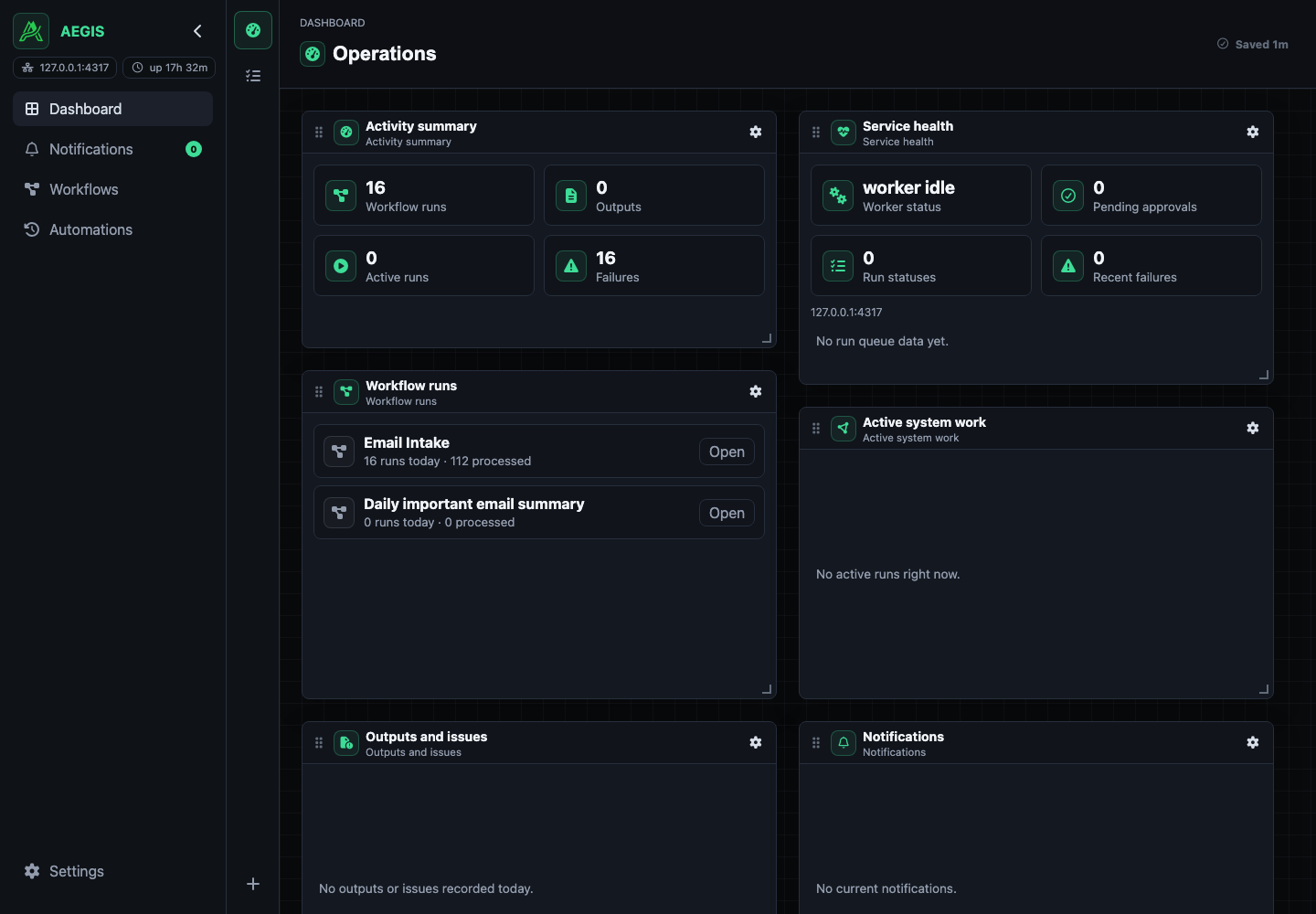
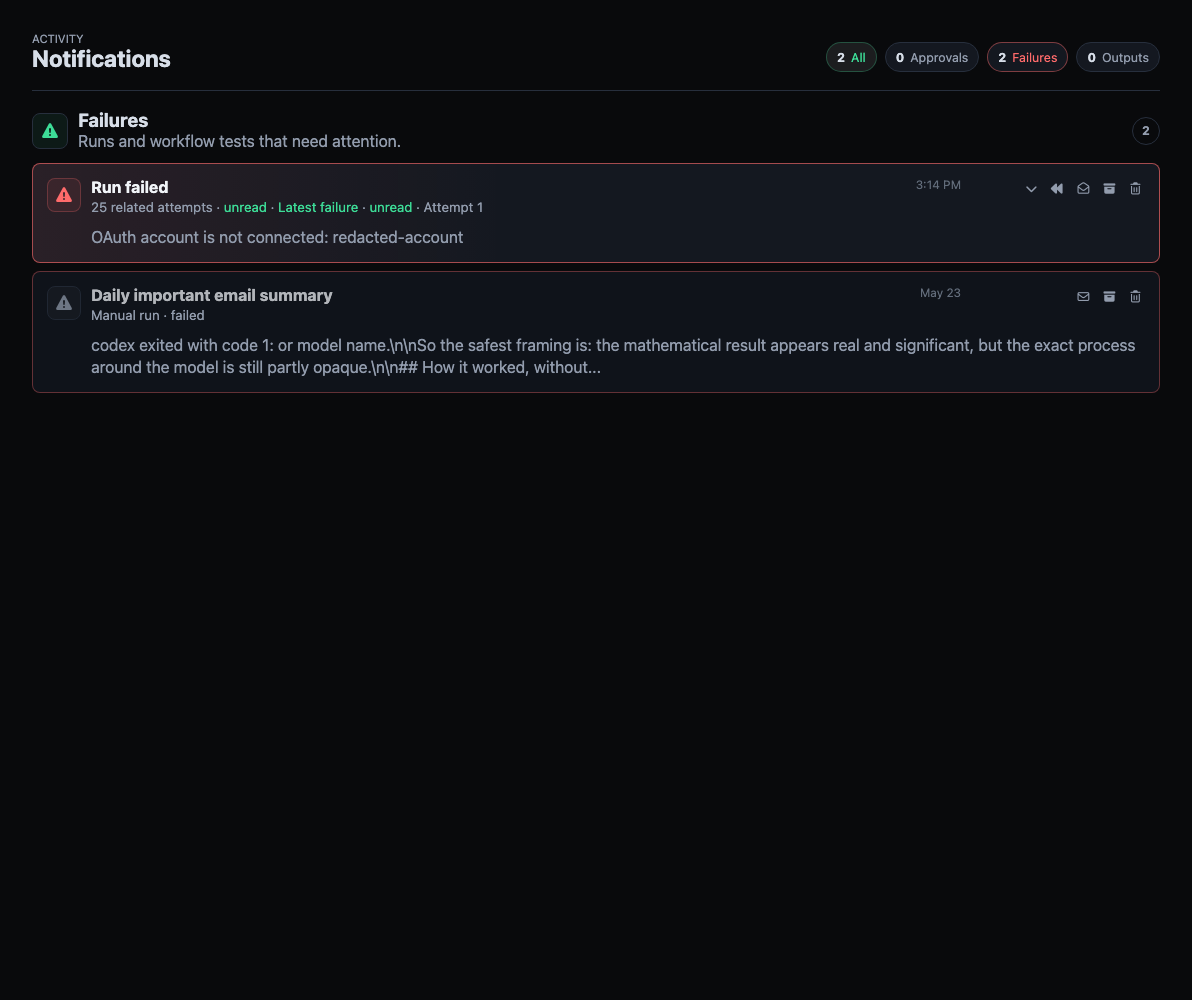
The dashboard makes active work visible. It shows the current project, recent runs, pending approvals, failures, retry history, outputs, and the evidence attached to each result.
This creates a practical place to supervise several agents without losing the history behind a decision or artifact.
[ 04 / THE WORKFLOW ]
Compose the work.
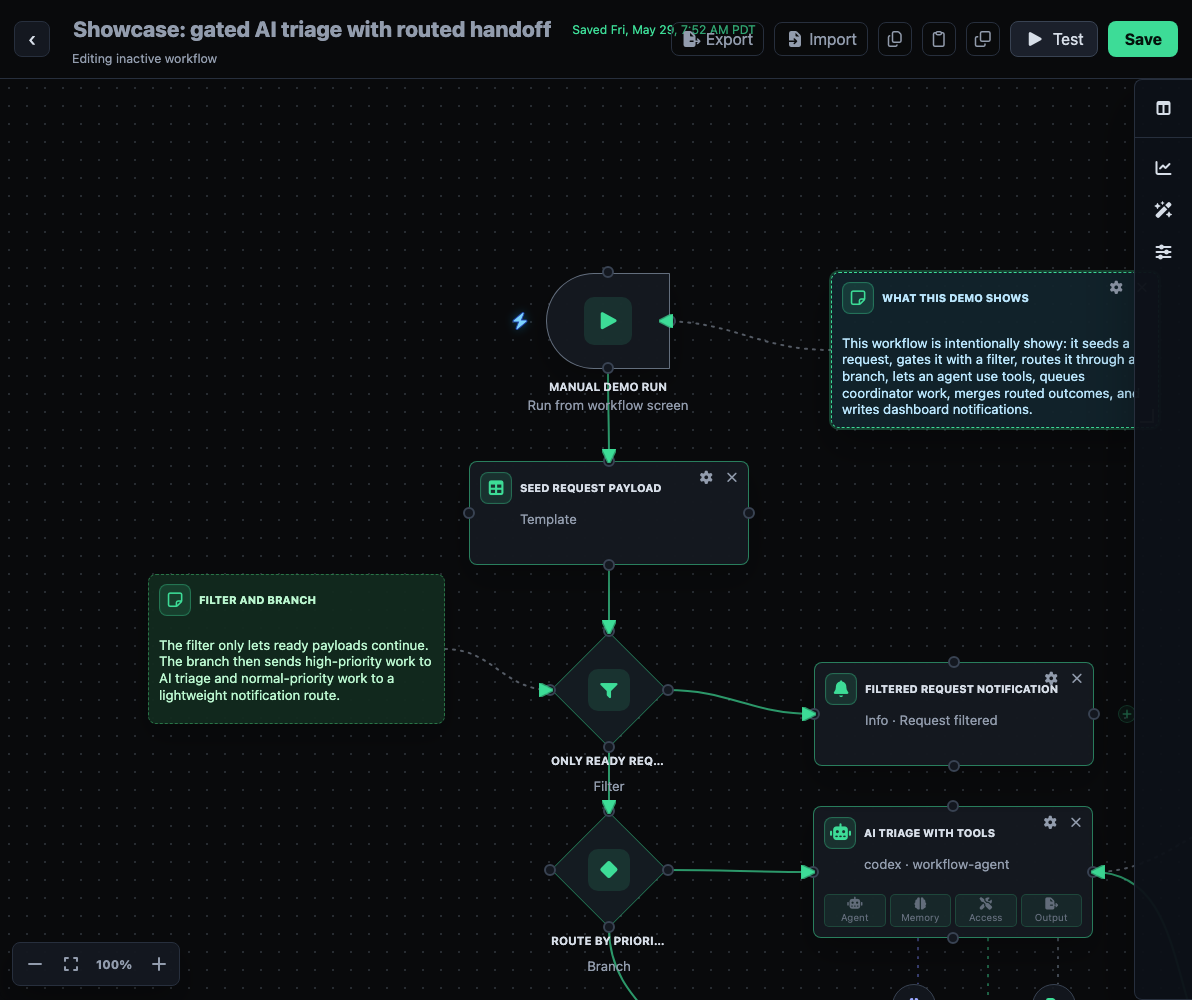
The workflow designer connects agents, tools, parsers, filters, approval gates, and branches. Each node has a clear responsibility, and the path through the workflow remains inspectable after the run.
The result is a local system for running serious agent work with deliberate access, visible checkpoints, and evidence that survives the conversation.